Sunday, January 29, 2017

#7 Blue/Gold Tee Renovation

Week 2 of the tee renovations continues with #7 Blue/Gold Tee.  We are splitting up what was a very large and long stretch of tee surface.  We are also eliminating any tee surface on the sloping part of the tee, as well as the small plateau that was in the middle of the tee.  When completed there will be three separate tees in place of the original.

Removing the small plateau and leveling the tee. 

The sloping transition area will now be rough grass.
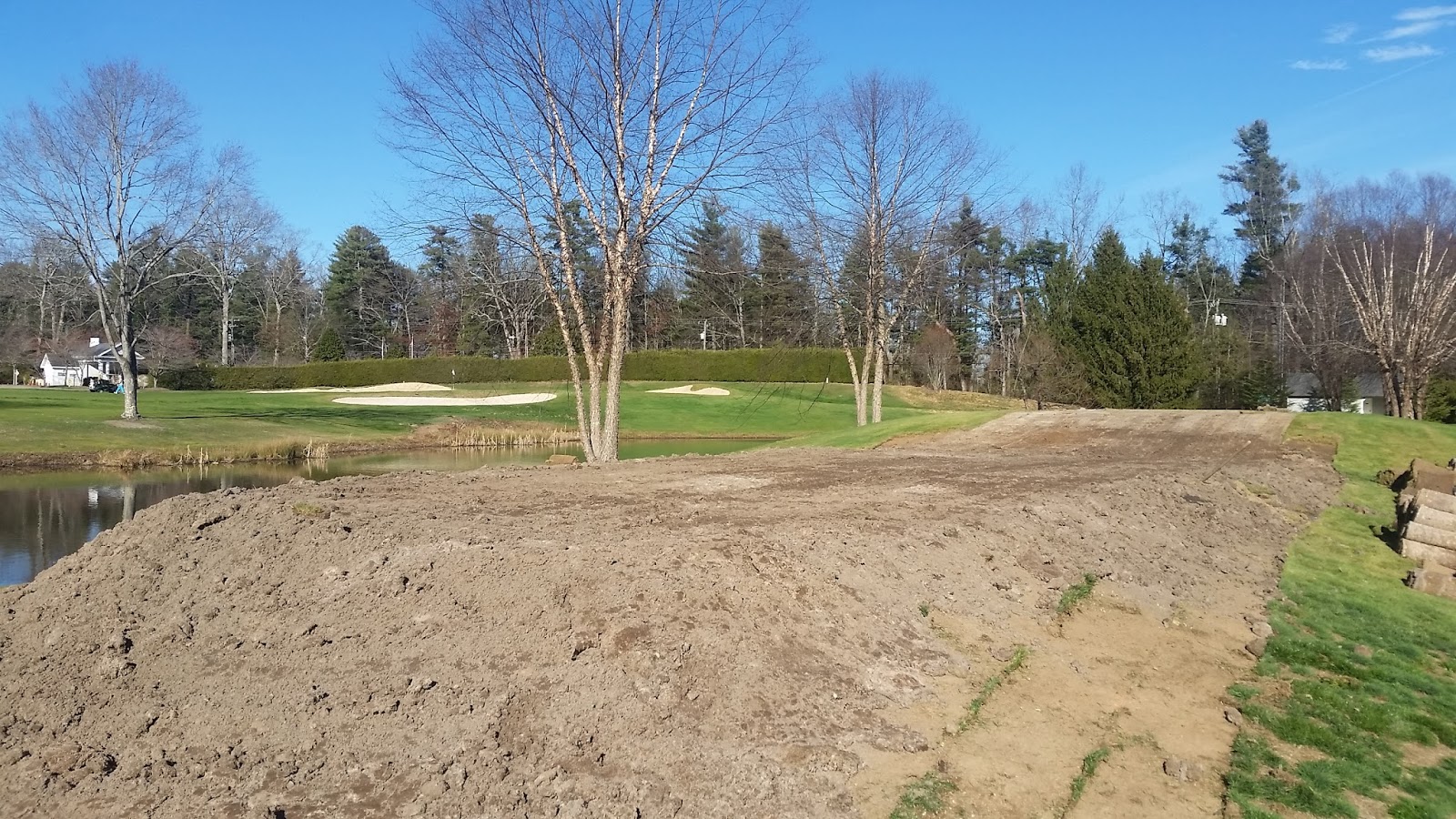
Finish grade and ready for mix.

Replacing the sod, recycled from this tee and other areas.

These guys have handled lots of sod in the past 2 weeks.

Making sure none of this sod dries out, we want a quick heal.

A view of the new blue/gold tee on #7

This is the front of the new alternate blue tee.

Front left view

Front right view

Saturday, January 28, 2017

#6 Red/White Tee Renovation

The second week of our tee renovation project started off on hole #6.  This tee had two tiers and was very narrow and uneven.  It is now a single tier tee box that is level with a greater width.  

We reuse all sod except some of the tee sod that has divots or crabgrass.

Demetrio is finishing the grade.

Root zone mix is being distributed evenly.

This tee is now ready to have the sod reinstalled.

Sod installation underway.

Finished view from the back.

Finished view from the front.

Irrigation system is winterized, good thing we have some ponds.

Making sure the sod will be happy/

Thank you for playing from the Glenroy tees while we complete the work.


Friday, January 20, 2017

Gold/White Tee Renovations Begin

This week was the start of a much needed renovation of the gold/white tee boxes.  Most of the white tee boxes that also contained the gold tees were too small and many of them not very level.  We are revisiting all these tee locations this winter and making some much needed improvements.  The pictures below are from the first week of this renovation project that began on January 16, 2017.  The weather was beautiful with most days reaching into the mid 60's.


Regrading the white/gold tee on #2.  The new tee has %40 more teeing surface and is level.

Stripping the sod from the white/gold tee on #4.  This is the first step in the process.

The finish grade on #2 before root zone mix and sod.


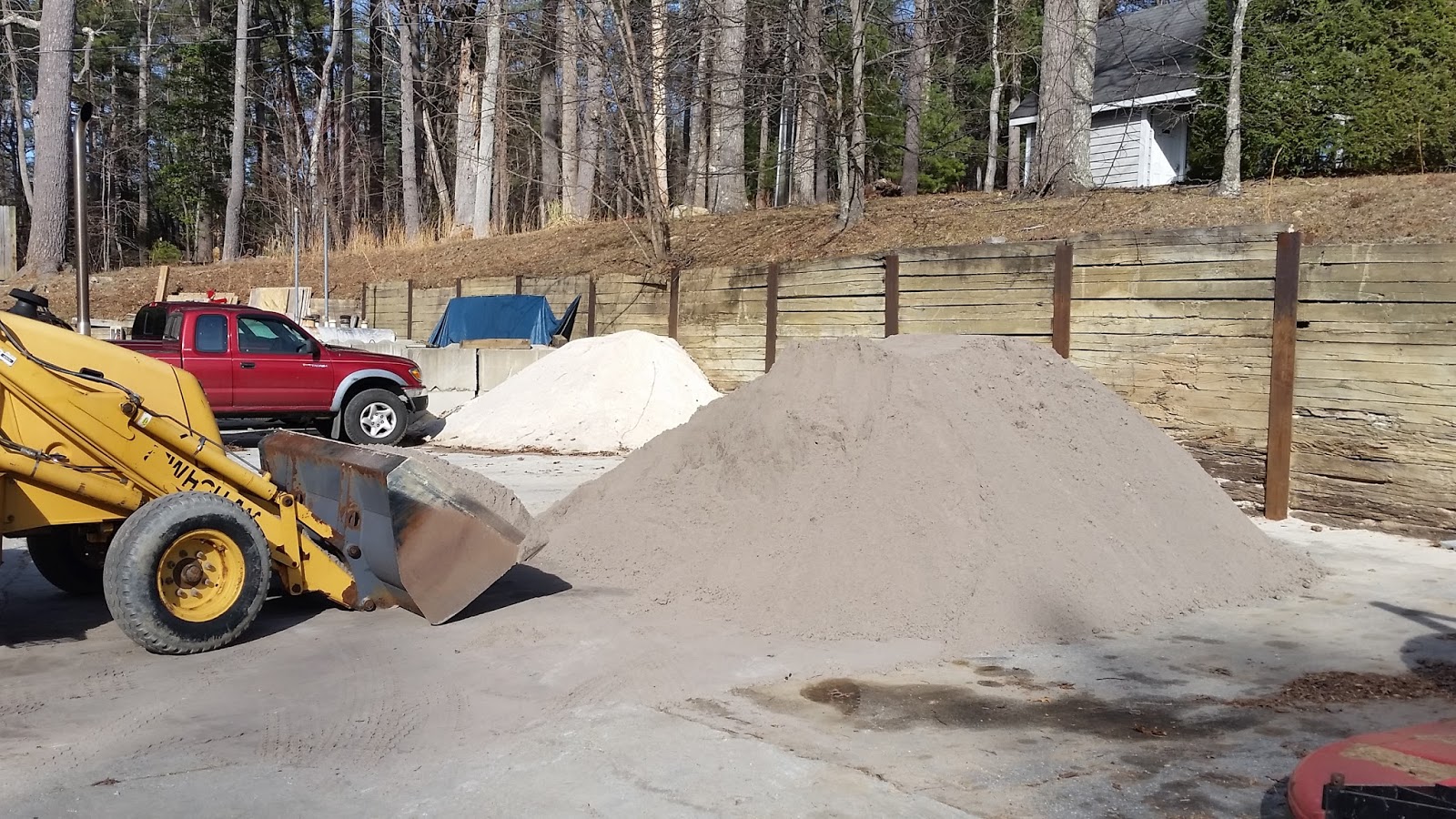
Root zone mix (60% sand %20 peat %20 topsoil)

Root zone mix applied and sod being installed on #2.

Finish grade on #8 white/gold tee.

#8 white/gold tee is now double in size and very level.

All the sod installed back on to #2.  Regular mowing will return the shape to the rear of the tee.

Root zone mix and sod installed on #4 white/gold tee.


Sod used in the project is all recycled from other areas of the golf course.

Harvesting tee sod from #7 blue/black tee.  This area will no longer be tee surface in the future.

Sod from #7 being installed on the new white/gold tee on #8.

#8 white/gold tee ready to grow back in.

Topdressing seams and cracks prevents edges of sod from drying out and increases recovery time.

Sod harvested from #2 blue/black tee.

The new #2 black and blue tees.


Winter Work 2017

Its that time of year again!

The 2017 winter project season is upon us.  It looks like we are going to have some great weather.


The 87 Ford is ready for another season!

This fence is recycled from the old 12 Bones location.

Clyde is back in action after being away recovering,

Wood being prepared for new tee markers.

We save around $20 per marker by making them ourselves.

We built a new collection box on the back of the old Chevy.

Dead Oak Trees that needed removal.
I think this area still has too many trees.

Thursday, December 8, 2016

Winter Playing Conditions


The weather conditions stay mild enough in the winter to keep the golf course open year-round.  We have had some winter storms that have kept the golf course closed for long periods of time, but this is not at all commonplace. The number of rounds played on the course shrinks significantly during the winter months due to a combination of members who are not year-round residents, to the simple fact that some days it’s just too cold or possibly snow covered to play golf. 

While the weather conditions are such that they allow for year-round play here at Kenmure, the temperatures are low enough to stop the growth of the turfgrass, especially on the shorter cut surfaces like greens, tees, and fairways.  This growth stoppage allows us to shift the focus of our labor onto other things like leaf cleanup, tree removal, drainage projects, and other needed renovation projects.  This is the time of year when we no longer mow any grass, change the pin locations with less frequency, and focus on things to make golf course better for the next season.

It is important to understand that the expectation level for course conditions is not the same as it would be during the growing season (April-Nov), because the turfgrass has no ability to heal from damages caused by the wear and tear of normal play.  This becomes especially evident on greens surface where ball marks are left unfixed by players.  Freezing and thawing of the upper level of soil in the green surface also contributes to uneven and bumpy putts.  We do utilize our greens roller to help smooth the greens some, but the weather generally doesn’t allow us to use it with enough frequency to make a significant impact.


Thank you for understanding the seasonal nature of golf here at Kenmure.  We do our best to keep the course playable throughout the winter, and ask that winter players help us by following cart path restrictions, frost delays, and fixing all ball marks on the greens.  

Wednesday, November 2, 2016

Friday, September 2, 2016

Crabgrass Concerns?

 Late summer is when Crabgrass has reached its peak growth and is the most noticeable to golfers.  This golf course has never been crabgrass free, but I do agree that we are seeing much more crabgrass now than in the past.  Crabgrass is a summer annual weedy grass that germinates from the prior year’s seed.   This means that as you get more and more adult plants the seed production increases leaving you with a greater challenge for the next season.  The only good thing about the crabgrass plant is that it quickly dies when colder temperatures come and the first frosts of Fall arrive.

We treat the golf course every year with a pre-emergent crabgrass prevention chemical and in the past couple years it has only proven to be only marginally effective.  We also have a product that can treat the crabgrass after it has emerged but we can only achieve success with this chemical if it is used when the plants are very small and just appearing in the grass canopy sometime in late June.

I realize that crabgrass is very ugly and no one wants to see it on the golf course.  Unfortunately, there is not much we can do to the mature plants without hurting the bentgrass this time of year.  What we can do is re-evaluate our spray program and make some changes for next year.  We have a plan to spray a split application of pre-emergent herbicide next spring to increase the window of time the chemical can be effective; we also plan on using a post-emergent herbicide product to kill anything that comes through in June/early July.  I feel that this strategy will yield much better result than we are currently experiencing.

The crabgrass will soon be turning purple when we get some cooler nights.  Then it will slowly fade back into the turf canopy and out of sight.  The seeds will stay dormant in the soil until the soil temperatures start to rise again in the Spring.  This is when we can start to wage the battle against the crabgrass.  It will be a never ending fight but I think that with the proper tactics in place we can make a large difference next year.

Thanks,

Josh Laughridge